15 May 2011

And we'll all go together when we go...all suffused with an incandescent glow...

Or maybe not.

What happens in your head on Saturday 21st May at 6pm
local time when you discover that there’s no global earthquake, no
judgement day; you haven’t been Raptured up into glory and neither has anyone else?

What happens when you’ve pulled your kids out of
school, resigned your job, sold your house to buy into the wagon train of doom trundling around America bringing the '‘good’ news of damnation & destruction to everyone?

Do you stand around muttering ‘oh…..er……well’, and wonder what to do next? You’ve spent years preparing yourself for teh 2nd coming and He's stood you up.

You’ve already written off humanity as a bad job deserving of damnation and tribulation (but not you). Everything humans do is poisoned, sinful, loathsome in God’s eyes; you’ve no hope for the future, no faith in all the endeavours of humanity to progress, to get better, to live at all. All that is pointless and you want it to end next Saturday.... and it doesn’t. What happens in your head?

Was it a mistake in the math? It’s still going to happen, right? The Bible can’t be wrong on this can it? No, that's not possible: there’s just been a temporary postponement: armageddon is on hold...….wait….it’s just been revealed to brother XYZ that the new date is to be..blah blah blah and we’ve been blessed with more time to get the new date for the apocalypse into as many peoples diaries as possible.

Is that what happens? You retrench into some miserable little end time cult, growing ever more dissociated from reality; alive in the world, but not living in it, part of humanity but taking no part in it.

But all that’s for later. What do you feel as the great day approaches? Fear, trepidation, expectancy, transcendent joy? What do you feel for the unraptured, the damned: the ones that will be left behind to experience unspeakable levels of torture, terror and torment? They’re getting what they deserve, right? No need to feel bad for them.

And polls suggest that somewhere around 40% of Americans, (123 million people), believe in some such apocalyptic scenario, and many believe it will happen in their lifetime.

On one level this is funny, but on another it’s tragic - as well as bewildering: that so many can abrogate responsibility for humanity to some fantasy going on in their heads beggars belief.

The trouble is: the more they dream of heaven, the more likely becomes hell on earth.

04 May 2011

Flatlining

I’m not doing a good job of working out how I feel about OBL flatlining at the bottom of the ocean.

Flat, actually, is about right.

I don’t feel like celebrating, I don’t feel any sense of closure, I don’t feel like the world is suddenly more secure, I don’t feel any thrill of retributive justice, despite the thousands and thousands of people who have died either directly or indirectly because of that insane lunatics skewed view of reality. I don’t feel like it’s drawn a line under anything or settled anything or nudged the world an inch closer to sanity.

In the decade since that dreadful Tuesday on Sept 11th, I’ve watched, listened and read about all the casualties of the ideological and religious warfare that’s plagued humanity for thousands of years. It never goes away. No politician will make it go away, no religion, no guru, no masters from outaspace, not the second coming, not Dr Who. It can only be made to go away by humanity coming to its senses one day.

01 May 2011

Alice in Interland

'Oh dear, oh dear. Not again!' exlaimed Alice, falling down another rabbit hole, this time promising to herself not to drink
anything that said 'DRINK ME' on the bottle, or to eat anything that said 'EAT ME' on the label, no matter how sugar coated or jam filled or otherwise tempting it looked.

She landed on a sand dune next to some, (possibly American, it was hard to tell), special services personnel operating laptops.

'What are you doing?' asked Alice, trying to shake the sand out of her dress.

'We're sending drones to attack the Gaddaffles with rockets,' answered one of them, poking the ENTER key with a grubby finger.

'Oh, I see,' said Alice, who didn't really at all. 'Will it hurt?'

'Oh, I expect so.... probably, very much.' said the soldier.

'But you won't actually be there to see?' queried Alice.

'Well, no, not exactly: but we will see it, sort of, on the screen,' said the soldier, turning his laptop round for Alice to watch the buildings explode on the little screen.

'Ahhh, I see,' said Alice 'it's a sort of computer game then? The Gadaffles must be very naughty,' observed Alice. '

'Some of them are VERY naughty and some of them are a bit naughty and some of them are not really all that naughty at all.' replied the one who seemed to be in charge.

'Your rockets,' queried Alice, seeing through the eyes of the distant drone, 'can tell the difference then?'

'Ah, well, no, not exactly, that is, not precisely, not 100% accurately, no, they can't,' admitted the leader.

'You really mean not at all, don't you?' exclaimed Alice, thinking 'I am beginning not to like this particular Rabbit Hole all that very much.'

18 April 2011

the pen and the s word

Anyone would think I hadn't written a damn thing for a whole month. It wouldn't be true though. The pen may be mightier than the sword but it's a damn sight easier to ignore.

18 March 2011

The Red Nose Academic Bus Company Ltd

Our roving reporter interviews the CEO of Red Nose Academic Bus Co on the benefits of deregulation.


RR: Are we likely to see improved productivity and performance following nationwide academic bus deregulation?


CEO: Yes, certainly.the freedom to choose our own passengers and create our own routes will allow us to fulfill our ambitions by investing in our shared destiny in innovative ways.


RR: Isn't the destination marked on the front of the bus?


CEO: Well, for operational reasons, sometimes it is necessary to change the destination during the journey.


RR: Won't that be confusing for the passengers?


CEO: Not really. They will all end up in the same place eventually.


RR: How will you go about choosing the passengers?


CEO: Obviously, we want passengers that can get on and off the bus quickly and who don't slow us down too much, or take up too much of the drivers time trying to find their bus passes or purses.


RR: All the other bus companies are academic now too. Won't they all be choosing the most profitable routes and passengers?


CEO: Possibly. Some restructuring of services is inevitable. Market forces will weed out inefficient or failing bus services which can then be liquidated or taken over by more efficient and successful bus companies.


RR: Won't that mean, inevitably, that some areas and passengers get poorly served or find there is no local service at all?


CEO: Well, you must remember: anyone can set up an academic bus company now....anyone with a double garage or an old barn can build and run a bus company. No expertise or special qualifications are required; so, where a need is perceived, hopefully the market will develop a service to meet that need.


RR: Good. It all sounds rather jolly exciting.


CEO: It is: and at weekends we can strip out the seats and do house removals too!


RR: Lovely. Well thank you very much. Can I get the 11.15 to Preston now?


CEO: Er...um....sorry, that bus left at 10.53 apparantly. It seems you've missed the bus. There'll be another along shortly I imagine.

09 February 2011

stuff

I expect the annoying clatter of glass, or the grumble of wheely bins being pulled by grumpy men in flourescent jackets in cobbled back alleys every other tuesday morning. It's nearly light at 7 now: not enough for the world to have colour, but enough for it to be washed in grey.

The neighbour knocks. She is worried the slate on the kerb is from her roof. I tell her it isn’t (because it’s from ours :-(). She is old and has those eyes that always look puzzled and afraid at the same time: because the world no longer makes any sense and she doesn’t know who to trust or listen to anymore. She won’t take any advice anyway because she wants her own control of the world back. It must be so frightening to lose your grip like that: for the world and its meanings to draw in and become incomprehensible, till your safe world shrinks to the boundaries of your own house, and then things, even in that world, no longer seem to make sense: the tv remote, the combi boiler, the washing machine, the fuse box; all a mystery, a hopeless mess of fiddly incomprehensible buttons. Mastery of your place is a big part of who you are. If I wasn’t in Lancaster among familiar things, I wouldn’t know who I was either this morning; my head is a fog of headache and cotton wool struggling to behave like proper neurons. This is not good.......

Today they will pretend there is a leak at the power station; people will talk earnestly into radios - in studiedly calm voices - and assure each other that all that can be done is being done. The public will ring and ask me what to do…and I will feel like telling them. Men will be placed on standby, as the pretend radioactivity drifts north towards sheep; their jackets will already be fluorescent, as, shortly, will be the sheep. Hey Ho…..

06 February 2011

Macademy

Thatcher began her attack on the state education system by doing everything she could to undermine comprehensive schools in the 80’s. Blair carried on where Thatcher left off and paved the way for the privatisation of education. Cameron, Clegg and Gove are now pushing the policy to its logical conclusion by inviting all schools to leave the state sector and apply for Academy status, which frees them from the control of local education authorities and allows them, barring a few legal constraints, to teach whatever they like.

Politically naïve heads and governing bodies are falling for the government spin, the lure of extra cash, not to mention the inflation of their egos and the supersized head teachers (?) salaries. As too are other bodies with an ideological or theological axe to grind. (See for example this article in the Times Educational Supplement about an evangelical creationist academy in Newark). Academy Pastor Gareth Morgan, the church leader and the driving force behind the free school bid, confirmed that creationism would be taught across the curriculum, should the school be given the green light.

"Creationism will be taught as the belief of the leadership of the school," Pastor Morgan said. "It will not be taught exclusively in the sciences, for example. At the same time, evolution will be taught as a theory."

The church website carries a video that states: "If creation is true, there is a purpose to life. If evolution is true, there is no purpose to life." It adds that "if creation is true, then man is a fallen creature and we need a saviour. If evolution is true then man is an evolving creature and we don't need any saviour"

You can easily see why this new regime appeals to religious organisations of all flavours. They have the funds and the wherewithall to set up such academies, and all the major faith groups are rapidly making moves in this direction. Right at the top of their agenda is the inculcation of their belief systems into young minds and if scientific facts like evolution happen to get in their way, then their fiction must take priority.

Other schools or prospective academies not driven by such motives may be tempted by the large financial carrot the government is dangling in front of their noses. At a time of severe cut-backs in public service provision, it must be very tempting for schools to take advantage of any extra cash on offer and to seek some degree of protection from further cuts to come. This is understandable, but the money for the large financial inducements offered to schools taking this route must come from somewhere, and if comes at the expense of deeper cuts to libraries, elder or youth services or even to wider education support services, then the rationale for such a change seems rather shaky to me. It is a curious morality that seeks advancement in isolation at the expense of those less fortunate.

It is not clear to me how much short term financial gain will be off-set by academised schools having to buy in services previously provided by LEA’s. I am thinking of such services as: education and welfare services; pupil support services (behavioural, psychological, clothing grants, music, outdoor education, SEN support); central staff costs (maternity, sickness, redundancy, early retirement, legal); asset management; repair and maintenance, the costs of devolved statutory and regulatory duties; museum and library services…the list goes on and on. If large numbers of schools opt for academy status, services previously provided at ‘at cost’ basis by local authorities will presumably be provided by private companies on a ‘for profit’ basis, thus very likely increasing the overall costs to the school budget.

Those not biting the finacial carrot may be tempted by the increased autonomy that academy status offers. But schools already have a high degree of autonomy, constrained, to a degree, by the demands of government, curriculum requirements, testing, Ofsted inspection and so forth. Crucially though, in my view, schools that remain in LEA’s can retain an overview of the broader needs of the communities in which they are situated rather than operate in isolation in their own interests. They may also be subject to control of the provision of school places and the schools admissions process in the interests of the community at large. This curtails what must be a very large temptation for academy schools to craft admissions policies with a view to creaming off talent, enhancing their reputation and status and attracting yet more funding and the more able pupils at the expense of other educational establishments and the interests of the wider community.

Academy school status does bring greater autonomy for schools to modify the terms and conditions of employment contracts for teaching, administration and other support staff. This further inculcates a competitive ethos into the whole system. Education is not a competition. It seems to me there is nothing to gain and much to lose from breaking away from nationally negotiated salary scales and terms and conditions of employment. Promises that teaching and other staff will not lose out in the long term are effectively meaningless as academy status affords the power to change terms and conditions at will according to localised priorities and circumstances.

Finally, there is the lure of status and the promise of raised standards and high pupil attainment. Unfortunately, the word academy is not a synonym for quality. It is not the name a school calls itself, “foundation” “academy” “technology college”, nor its strap line, nor even its results, or its place in the league tables, by which the quality of an educational institution should be measured. It is the skill, dedication and commitment of the staff; the involvement of the parents; the interest and enthusiasm of the pupils; the quality of support services and so forth. Educationalists should not narrow their focus to the success or otherwise of any particular educational establishment or any group or set of children. It is not just ‘my child’ or ‘your child’ that is important, it is every child. A ‘best and then the rest’ approach to educational policy is, in my view, both narrow minded and morally impoverished.

In any case, the available evidence does not support a conclusion that academy status is either driving up standards or improving pupil attainment levels, nor does academy status prove to be any defence against decline, failure or closure. Seems to me the whole exercise is just a part of the wider project of dismantling more of the architecture of our society and selling what can be sold off into the private sector.

So, all in all, it is disappointing that clodlet’s school is going to look at going down this route. I’m not worried that the school would begin to teach garbage to him so much as for the other reasons given above.

25 January 2011

eden & horseradish

I went to the Garden of Eden in the early 70’s - having steamed up the Shatt al Arab waterway. That’s the one they’ve been arguing about ever since the Shi’tes and Sunnis fell out in the 7th Century. It was dodgy then and is even dodgier now: one side or the other is bound to arrest you for straying across an invisible border.

We got off at Basra where the security guards were smelly and looked threatening. Lizards and heat and me crawled up the wall while they fingered passports and wondered if they could clap us in jail for something. Eventually we realised they just really really needed some dinars to oil the wheels of international diplomacy. Baksheesh.

Don’t know what bought that to mind today. Anyway, I do remember it was rubbish: a few date palms, some scrubby grass and lots of sand. I wouldn’t trade my allotment for it. There wasn’t even a shed. And some stupid rule about not eating apples. Bollocks. God was a perfect allotment committee chairman but a lousy landlord. Now if he’d said, “don’t eat the horseradish”, that would’ve made sense. I could understand that.

Horseradish is rubbish. Yeughhhh!


[pic of rubbish horseradish]

24 January 2011

popepourri

Popepourri

“In the digital world, transmitting information increasingly means making it known within a social network where knowledge is shared in the context of personal exchanges. The clear distinction between the producer and consumer of information is relativized and communication appears not only as an exchange of data, but also as a form of sharing. This dynamic has contributed to a new appreciation of communication itself, which is seen first of all as dialogue, exchange, solidarity and the creation of positive relations. On the other hand, this is contrasted with the limits typical of digital communication: the one-sidedness of the interaction, the tendency to communicate only some parts of one’s interior world, the risk of constructing a false image of oneself, which can become a form of self-indulgence.”

So….what is it then….a sharing of information or a one-sided interaction? Bless me internet….it is 50 seconds since my last digitisation. I have had lewd thorts, cussed in tongues and dissed religion something chronic and created 25 false idols of meself.

“Entering cyberspace can be a sign of an authentic search for personal encounters with others, provided that attention is paid to avoiding dangers such as enclosing oneself in a sort of parallel existence, or excessive exposure to the virtual world. In the search for sharing, for "friends", there is the challenge to be authentic and faithful, and not give in to the illusion of constructing an artificial public profile for oneself.”

Er…..parallel existence? Give into illusion? Artificial public profile? You looked in a mirror recently?

"Is there is a risk of being more distracted because our attention is fragmented and absorbed in a world "other" than the one in which we live?"

You tell me.

"In the digital age too, everyone is confronted by the need for authenticity and reflection. Besides, the dynamic inherent in the social networks demonstrates that a person is always involved in what he or she communicates."

Rubbish…who’s typing this….get off my keyboard!

“….It follows that there exists a Christian way of being present in the digital world”

So, there must be a Hindu, a Buddhist, an Islamic, a Zoroastrian way, right?

“The task of witnessing to the Gospel in the digital era calls for everyone to be particularly attentive to the aspects of that message which can challenge some of the ways of thinking typical of the web”

The web thinks?

“First of all, we must be aware that the truth which we long to share does not derive its worth from its "popularity" or from the amount of attention it receives.”

MEMO: Benedict to Vatican IT. How come we only got 5 hits last month?

“I would like then to invite Christians, confidently and with an informed and responsible creativity, to join the network of relationships which the digital era has made possible.”

Gee, thanks, thought you’d never ask.

“The web is contributing to the development of new and more complex intellectual and spiritual horizons, new forms of shared awareness”

Yup, no hiding place now.

“Believers who bear witness to their most profound convictions greatly help prevent the web from becoming an instrument which depersonalizes people, attempts to manipulate them emotionally or allows those who are powerful to monopolize the opinions of others.”

Wouldn’t dream of it, would you?

“On the contrary, believers encourage everyone to keep alive the eternal human questions which testify to our desire for transcendence and our longing for authentic forms of life, truly worthy of being lived.”

As opposed to inauthentic forms of life not worthy of being lived…?

“I invite young people above all to make good use of their presence in the digital world.”

By learning what a thoroughly corrupt, despicable and evil cult of misery you lead? Good idea.

From the Vatican, 24 January 2011, Feast of Saint Francis de Sales (patron saint of communication workers everywhere).
BENEDICTUS PP. XVI

18 January 2011

The Master and his Emissary - reviewed


The Master and his Emissary - The Divided Brain and the Making of the Western World.


In which Ian Mcgilchrist takes an interesting idea and stretches it to breaking point.

The Master and his Emissary tells an old tale......

The basic idea is that we have evolved with an asymmetrical split brain, the two hemispheres of which have different 'takes' on the world, different ways of 'seeing' reality, both of which are crucial to optimal functioning. The left hemisphere is more analytical, reductionist, particular, linear in viewpoint; it will help you break a problem down into its component parts, it will 'see' the detail, it can focus on a grain of food and pick it out against a background that looks similar. The right hemisphere takes a more global and overall view of things. It 'sees' context, it's aware of the surroundings - it's aware of the storm approaching and the predator behind those bushes; watching you while you eat the grain. It can see the big picture. It is holistic, empathic, emotional, connected.

Apart from the few wild places left, the world we've created is built by our brains interaction with the world. The cities, the cars, the credit cards, the shopping malls, the banks and the town halls, the theatres and the zoo. All of it. So what have we created? A mess, it seems: and the reason, according to Mcgilchrist, is that our brains are out of balance, the left hemisphere (the emissary), has taken over from the right hemisphere (the master), which it is now effectively suppressing and has taken over the reins, and fashions our lives according to its dictates.


To explore this idea, he takes us on an (enjoyable) and very detailed journey through neuroscience, history, anthropology, art - all of civilisation in fact. At the end, he paints an apocalyptic vision of what a world dominated by left hemisphere thinking would look like: not a pretty picture, to say the least. He looks (through rose tinted glasses, I feel) to times in the past where he believes the left and right hemispheres have been more balanced - ancient Greece (circa 600BC) for example. He states, without providing evidence, that this power shift to the left, is not as prevalent in India say, or in Japan. He seems to have a somewhat romantic view of these more right hemisphered societies, seemingly able to put to one side the vast social inequalities, grinding poverty, feudal hierarchies and religious divisions contained therein.


At the end, I don't think his thesis can be supported by the current evidence available. I think it is too soon to reach the conclusions he has. At the very end, he sais that he won't really mind too much if his theory turns out to be incorrect. I don't really believe him though.


Essentially, it is an old old story. Plato or Aristotle would have deemed it a battle between good and evil, between god and the devil, between reason and the soul.

Mcgilchrist re frames it into a battle between the left and right hemispheres of the brain, between the master and the emissary. vying for power and control. It's a great read, even if you don't buy into the theory....


There was once a wise spiritual master, who was the ruler of a small but prosperous domain, and who was known for his selfless devotion to his people. As his people flourished and grew in number, the bounds of this small domain spread; and with it the need to trust implicitly the emissaries he sent to ensure the safety of its ever more distant parts. It was not just that it was impossible for him personally to order all that needed to be dealt with: as he wisely saw, he needed to keep his distance from, and remain ignorant of, such concerns. And so he nurtured and trained carefully his emissaries, in order that they could be trusted. Eventually, however, his cleverest and most ambitious vizier, the one he most trusted to do his work, began to see himself as the master, and used his position to advance his own wealth and influence. He saw his master’s temperance and forbearance as weakness, not wisdom, and on his missions on the master’s behalf, adopted his mantle as his own – the emissary became contemptuous of his master. And so it came about that the master was usurped, the people were duped, the domain became a tyranny; and eventually it collapsed in ruins.

good days

There's a slow rising mist over Hala beck and golden light from the sun as it peeks its head over a cloud bank. All the birds are singing like crazy: as if they know something. Everything looks a sort of golden green colour: the boughs of the trees, the walls, gates, fenceposts and sheds, even the greenhouse glass and sheets of corrugated iron; like everything has been painted with bacterial greenwash - I suppose it has been.

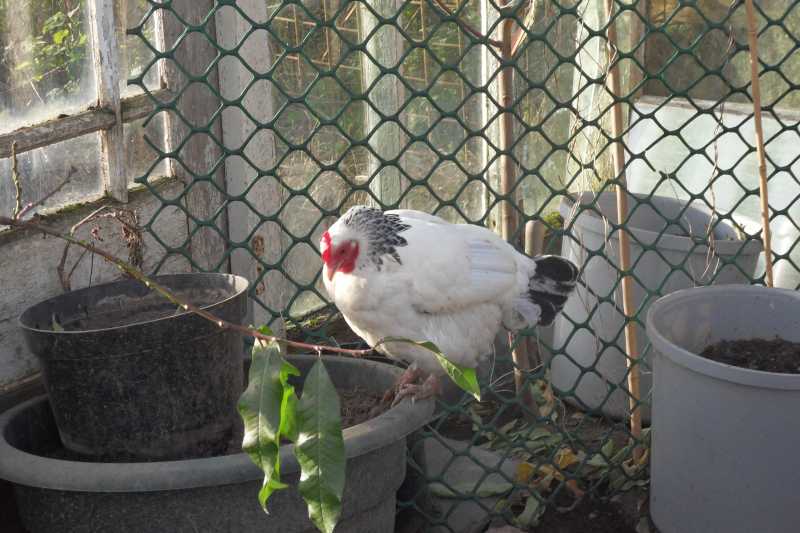
All the chikkins are in a fine perky, peckky mood. They rush out of the coop as soon as you open the door - it's funny - I call it the charge of the light sussex brigade. They've left a mountain of poop to clear up after our weekend away, but it's all good fertiliser which I will mix into the greenhouse soil when I dig it over.

Things seem simple and uncomplicated up here. I like the stillness and just sitting watching and listening to the birds and the warming sun lift the moisture off the damp grass in swirls of mist. I like not thinking sometimes; it's like a waking dream - you sometimes get it when you're playing music really well, and it just flows and feels effortless. Good days.

07 December 2010

Can you punch yourself in the face hard enough to break your nose?

If you stop and think about that for a while, I bet it would be difficult to come up with a scenario where such an action may seem reasonable.

On the other hand, imagine your hand is mangled up and trapped in some farm machinery, you’ve left the mobile in the cab, no one will be coming to look for you before it’s too late. There’s a hacksaw in the toolkit – which you can reach - and if you can summon courage out of insane desperation and use it, you could save your life.

What makes the difference between these two situations is that there is no justification for the first action, but there is for the second. Both involve harming yourself, but one action is reasonable, given the circumstance, while the other is not. To do either, reason must overide emotion, which it can do, even though emotion is much older and more primal in evolutionary terms than is reason.

Being a relative newcomer on the scene, reason is a bit sluggish, it’s hard work and it’s better if someone else does the slog. It likes duvet days. We often prefer to get our reasons all packaged up, ready to heat and serve piping hot. Many of the meals have already been served up anyway by our parents, for survival reasons: DON’T TOUCH THAT SNAKE! RUN FROM THAT ANIMAL! CATCH AND EAT THAT ONE! So we are used to accepting ready made reason from authority because it’s a useful shortcut that has survival value.

We also accept it from our culture, from our elders, from religion and so on, and build it all into a nice solid edifice of sacred values – not sacred in the religious sense of that word - but more in the sense of things that are so important and precious to us, so bound up with our sense of identity, of who we are, that to challenge them may well evoke an aggressive or even violent response.

I think this why it is diffult to make progress in resolving intractable conflicts. Both sides are defending what they see as their ‘sacred values’ - which lie deeper than what the dispute may appear to be about superficially. Scott Atran describes this well in this book. Such conflicts are not amenable to rational discourse.

The dispute between the religious and rationalist/skeptik mindset is of this nature. Rationalists tend not to trust their senses as a satisfactory method of determining truth. Science tells them, (and can demonstrate), that their perception of the world is a very limited mental construct or model of the real, packaged up in a way that enables humans to operate, survive and reproduce in the world. What truth, what reality is - says science - needs constant tinkering with the model, needs constant re-framing, testing, experimentation designed to rule out the bias of our senses (which we must then interpret with our senses!), then more testing when a bunch more data comes in.

The religionist also does not trust their senses because authority tells them how reality is. It is fixed, certain and immutable, and to back it up, they have scripture and may have had experiences, or may have interpreted experiences, in such a way which confirms their point of view.

Both see their position as having reason and being reasonable. Both may (or may not), be desirous of similar outcomes, but find themselves unable to get beyond the dictates of their ‘sacred values’ and limitations of theoretical and impersonal debate (esp in cyberspace), to the human underneath. It’s like a debate between Aristotle and Rousseau:

A: It’s obvious innit?
R: Leave it owt, mate.
A: Get some nous, and stop being shrill.
R: Nous causes cancer, dunnit?

………………oh dear. It's almost tempting to share Rousseau's view that the world would be better off without reason and language and everything that flows from it. We don't seem equipped to handle it properly. Reason is most difficult to deal with when furnished with attitude, and some weapons.

22 November 2010

vatican ribbed


Dear Jo

Top Hole!

Can't tell you how delighted Mrs Root and I are that you are going to allow all those cheeky chappies to use condoms!

All the alter boys are over the moon, one less thing for the poor darlings to worry about eh?

We sense business opportunities here Jo, and, if we may be so bold, think you must be aware of them too?

Being forward thinking Catholics, Mrs Root and I installed a machine next to the wet fish counter some years ago and now we eagerly await our first consignment of Vatican Ribbed(TM).

We'll take a dozen boxes of Haddock flavour, two dozen King Prawn - arf arf - they should go well, and we'd better have a half dozen of Sole flavoured too.

We quite understand that they are only to be sold in exceptional circumstances and we will get totally rigid sticking to that. But as you know Jo, Aids is like shares: it can go down as well as up, so we'd better sell them to everyone that's at risk. Sinful but safe - that's our watchword.

The first step is always the hardest Jo, but you've taken the church on its first one towards morality. Congratulations.

Here's a pound for the advertising campaign.

Roll them rubbers! Get it on Jo (not literally of course)

Your avuncular friends - Henry and the missus - still Rooting for you.

16 November 2010

on pringles and strings

If nothingness is limitless and there is an infinite amount of it within which thingyness can take place then there is no problem with either an infinite amount of nothingness or an infinite amount of thingyness is there? It’s not really going to bother you much one way or the other.

If there are a couple of hundred billion or trillion universes out there, or if string theory is correct, and there are teensy weensy bits of strings vibrating one way to make protons and another way to make gluons and gravitons and wot not, or if there are multiple dimensions wrapped up hidden within our own, I see no reason for coffee not to taste good or sleep to be not sound.

It doesn’t seem even that hard to envisage – at least not to my cloddish mind – I twang an open 1st on my guitar and get the note E or play it on the third fret and get the note G. Curled up dimensions hidden from our perception?….Hmmmm, bit more problematic: but if I roll up a sheet of A4, and show it you side on, you're going to have a problem knowing if it’s rolled just once or twice or three times, and the exquisite drawing I made on it when it was a flat sheet is going to have disappeared into dimensions you can’t easily see that will also play havoc with my fine artwork. Ha!

A squadrillion universes? Kind of exciting to think of it actually – but not a problem if it’s not so; this universe is quite entertaining enough for one lifetime, thank you very much. If our universe is held on an M theory brane – with other universes snuggled up alongside it - like a nice loaf of medium sliced wholewheat Hovis or a box of Pringles, with only gravitons being able to make the transition between the different universes/branes/slices?....Nope, still not going to lose any sleep over it - unless vodafone release a pulsed graviton mobile to enable me to converse with other internet sloggers (they’re called that there - in the parallel universe), then I would like one for Christmas please, pretty please.

One thing.... in a world of spontaneously generating and disappearing universes, the concept of god becomes about as useful as a Planck length on a pirate ship - unless it's Christmas.
Shan't lose any sleep over that either.
[edit: the Planck length, denoted â„“P, is a unit of length, equal to 1.616252(81)×10−35 meters = kind of small.]

the world is watching

I'm celebrating the release from house arrest of Aung San Suu Kyi, a truly remarkable woman, and hoping that it may eventually lead to the democratisation of Burma which has been ruled by a military government for over a generation.

Regimes have to be terribly brutal to repress citizens' freedoms and those that do it have to do it with ruthless violence because, if people want anything, they want not to be oppressed by government and they want freedom of speech and the right to associate freely and a place in the sun to grow.

Regimes that deny this can persist for generations, but only at the cost of much pain and suffering and by suppressing oposition and maintaining an iron grip on power. Most regimes that do it seem to fall apart eventually, either because of internal conflicts and rivalries within the regime, or because the people rise up and seek to throw out the oppressive rulers, whether peacefully, as Aung San wishes, but often with violent confrontation.

In releasing Aung San therefore, the Burmese regime has taken a big risk, or perhaps sufficient numbers of its leaders have had a change of heart. I don't know. I hope for the latter.

The hard religious right wing in America that campaign for, what is in effect, a theocracy - a government run on biblical principles, the christian equivalent of sharia law - with punishments of like kind for adultery and homosexuality and so forth, should be wary of what they ask for, because if they wish to do that, they will have to do it with a similar brutality, ruthlessness and violence that characterises the Talibans, the North Koreas, the Irans, Chinas and other such oppressive and dictatorial regimes of this world.

If America relinquishes its separation of church and state for a move towards the above, it is in deep trouble - for a people who have tasted secular democratic government will not relinquish it lightly or without a fight - and in the end, it is only such a government that can actually defend religious freedoms for all.

May your freedom last long, Aung San, and may your people soon taste of it too. The World is Watching.

14 November 2010

glass act


The gales gusted at about 80mph: they were bound to cause some damage. The owner of this plot is by no means the only one to plonk a shed down and expect it to stay put without any foundation or anchoring. As sure as night follows day, this is inevitable. Next time I see someone do that, I'll have a quiet word with them I think. Ours rests on bearers attached to concrete flags and has old scaffold poles driven into the ground on each side. It ain't goin nowhere. The old rotting wooden greenhouse we inherited is a mess though and another gale like that may do for it.


Now all the produce is out of the greenhouse, the chikkins are enjoying having it as part of their territory once more. Best of all, the soil is dry and they can have luxurious dust baths to their hearts content.


As well as the six sheets of roof glass we've lost to the winds, I'm having to replace all the horizontal bearers round the bottom of the glasshouse as they are all rotting away. This involves taking all the glass out, removing the rotten timber from the bottom and cutting back any rotten bits of the uprights to get back to sound wood. Then laying a new 4x3" bearer and fixing it into position and attaching the upright supports making sure they are all lined up properly so the glass will fit back in. Last bit is fixing the glass back into the frame with pins and silicone sealant (I'm using that because it's quicker and easier than putty).


The job will have to be tackled in (probably) 4 sections as I don't want to leave too much of it exposed to more high winds that may come along.


Pity glass is so expensive these days; I would be tempted to replace some of the other cracked pieces here and there if it was.


The ducks and chikkins are curious about it all but have a tendency to get under your feet while carrying chunks of glass around. Don't worry, they all survived. One section done, three more to go... *sigh*....

sorry

08 November 2010

coming up rosettes


It's too wet to do anything on the garden so we went up to Crooklands to see our friends from Cumbria Ferret Rescue centre at their ferret show.

Clodlet entered Pan in the sandy hob class and won first prize. It will go to Pan's head, I know it. Clodlet also won third prize in the young handlers section.

There were a gazillion ferrets there. It's nice to see a 'pong' of ferrets all cuddled up together in a hammock....looks so cozy. A man came up to me and said he was just passing in the car and came in for a look. 'Are these all working ferrets?' 'No,' I sais..'they're all on job seekers allowance, this lot.'

We don't make a habit of going to shows....don't really believe in them, but it was a fun day out and somewhat gratifying that Pan won against all the ferrets that get tarted up for the show with coat conditioner and vitamins and fur-brushed to death. Pan goes in straight out the cage and beats the lot.....go figure!